

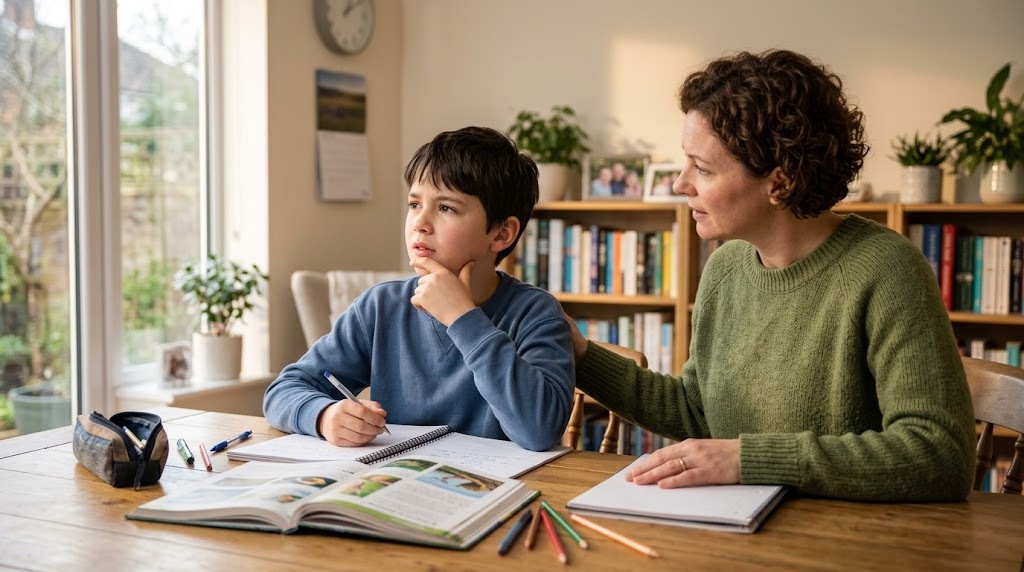
When a child struggles to read, write, spell, or keep up with numbers, the problem rarely stays on the page. Learning difficulties shape how children see themselves, how they express their ideas, and how they connect with others. Many parents notice the emotional effects before they understand the cause: a cheerful child who suddenly dreads school, a curious child who stops asking questions, or a friendly child who prefers to stay alone.
Understanding these effects is the first step toward helping your child thrive.
The Impact on Confidence
Children are quick to compare themselves with classmates. When others finish a worksheet in minutes and a child with a learning difficulty needs far longer, the child often concludes, “I’m not smart enough.” This belief can take root as early as age seven.
Over time, repeated struggle can lead to:
- Fear of reading aloud or answering in class
- Avoiding homework or pretending to be unwell
- Negative self-talk such as “I’m stupid” or “I can’t do anything right”
- Giving up quickly on new tasks
What makes this painful is that these children are usually just as intelligent as their peers. Dyslexia, for example, is a language-based difficulty that appears despite normal intelligence and conventional classroom teaching. The gap is not in ability. It is in how the child processes written language. Without that understanding, however, a child may decide the fault is theirs.
The Impact on Creativity
Many people assume learning difficulties limit creativity. In reality, the opposite is often true, but only when children get the right support. Many children with learning differences think visually, make unusual connections, and solve problems in original ways. Some of the world’s best-known artists, writers, scientists, and entrepreneurs have been dyslexic.
The danger is that school can suppress this creativity. A child who is constantly corrected for spelling errors may stop writing stories altogether. A child who cannot finish a written exam may never get the chance to show how brilliant their ideas are. Fear of mistakes makes children play it safe, and creativity needs the freedom to experiment.
When children are supported, the change can be remarkable. Many students discover a love of writing, public speaking, design, and research once their basic skills improve and their confidence returns.
The Impact on Social Skills
Social development is closely tied to self-esteem and communication. Children with learning difficulties may:
- Feel embarrassed in front of peers and withdraw from group activities
- Struggle to follow fast conversations or instructions
- Be teased or labelled as “slow” or “lazy”
- Find it hard to express feelings in words, leading to frustration or outbursts
Some children become quiet and isolated, while others act out to hide their struggles. Both reactions are ways of protecting themselves. Over time, limited friendships can add to loneliness and anxiety, making school an even harder place to be.
Remedial support can break this cycle. Children who learn alongside others who understand their experience often feel less alone, enjoy learning again, and find it easier to make friends.
What Parents Can Do
You do not have to wait for a crisis. A few practical steps can make a real difference:
- Watch for early signs. Reading reluctance, reversing letters, poor spelling, and difficulty with memory are common indicators of learning differences worth noting.
- Seek a professional assessment. A proper assessment shows exactly where your child struggles and where their strengths lie.
- Praise effort, not just results. Celebrate persistence, creativity, and progress, however small.
- Talk to the school. Share the assessment findings and ask about classroom support and accommodations.
- Keep your child’s strengths alive. Encourage drawing, sports, building, storytelling, or any activity where they shine.
How I-DARE Helps
Founded in 1999, I-DARE supports children aged 5 to 16 with specific learning difficulties in Karachi. Our approach goes beyond academics. Through remedial sessions, we use a structured, multisensory method built around each child’s strengths and weaknesses, with interactive games and activities that make learning enjoyable again.
Alongside this, counseling and student support help children rebuild self-belief, while awareness workshops help schools and families understand what children are going through.
Final Thoughts
A learning difficulty does not define a child’s intelligence, creativity, or potential. But without understanding and support, it can quietly affect how a child feels about themselves and others. The good news is that with early identification, patient teaching, and encouragement, children can regain their confidence, express their creativity, and build strong friendships.
If you are worried about your child, we are here to help. Contact I-DARE today to book an assessment and take the first step toward helping your child dare to unlock their potential.